food cart vs food trailer vs food truck, mobile food business, street food kiosk


Food Cart vs Food Trailer vs Food Truck: Which One Suits Your Business?
Starting a mobile food business is one of the most flexible, low‑barrier ways to break into the food and beverage industry. Whether you plan to serve street snacks, specialty coffee, wedding catering, or festival street food, choosing the right mobile food unit directly determines your startup cost, operational flexibility, venue adaptability, and long‑term profitability.
Most new entrepreneurs get stuck choosing between three mainstream options: food cart, food trailer, and food truck. All of them can work as a functional street food kiosk, but they differ drastically in size, pricing, transportation requirements, venue restrictions, and applicable scenarios. If you are asking, “Should I buy a food cart or food trailer for starting a street food business?” this in‑depth comparison guide will help you make a data‑driven decision based on your budget, business model, and target venues.
Full Comparison: Food Cart vs Food Trailer vs Food Truck
We break down the core differences across six critical dimensions: size, startup cost, transportation, venue requirements, applicable scenarios, and pros & cons to help you distinguish these three mobile food solutions clearly.
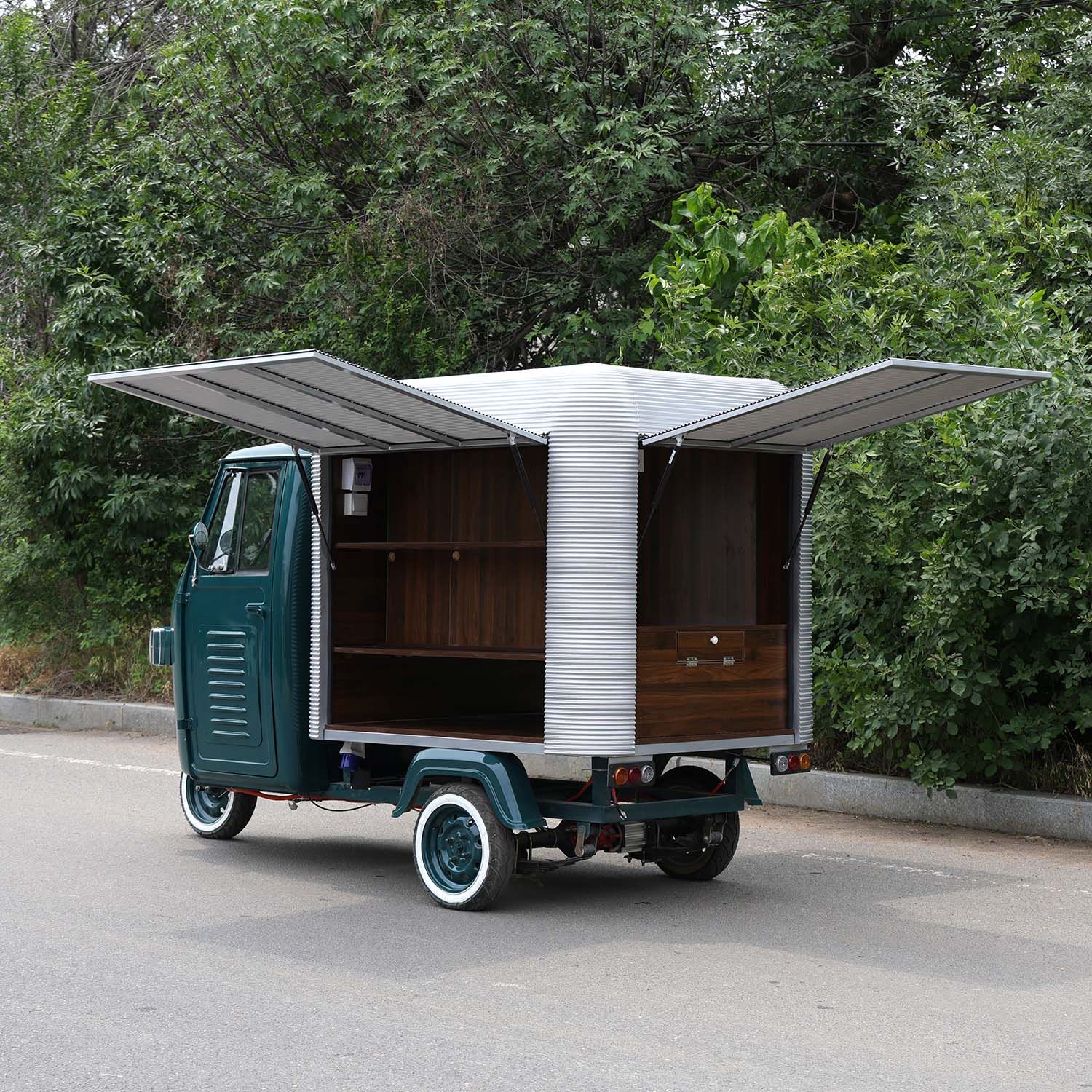
Food Cart | Compact & Low‑Cost Street Food Kiosk
A food cart is the smallest and most lightweight mobile food unit, designed for simple, fast‑service food and beverage sales with minimal equipment configuration.
Size & Operation
Compact footprint suitable for 1‑2 person operation. It only fits basic catering equipment such as warmers, coffee machines, ice cream machines, and simple worktables, with limited storage space.
Cost
The lowest investment among the three options. It requires no complicated modification fees, vehicle registration, or high‑cost insurance. The daily maintenance cost is almost negligible, making it perfect for budget starters.
Transportation
Highly portable. Most food carts can be pushed manually or towed by small vehicles. It cannot run on public roads independently, so it is only for on‑site fixed or short‑distance moving.
Venue Requirements
Zero threshold for most commercial venues. It can quickly settle in pedestrian streets, weekend markets, exhibition halls, and temporary event sites without occupying large parking spaces.
Best Applicable Scenarios
Pop‑up markets, small exhibitions, wedding dessert & beverage stalls, street retail, and light food businesses including specialty coffee, hot dogs, ice cream, and cold drinks.
Limitations
Unable to support heavy‑oil, high‑fire commercial kitchen equipment. Limited output capacity, not suitable for long‑hour high‑volume catering or formal full‑course meal services.
Food Trailer | Cost‑Effective Full‑Function Mobile Kitchen
A food trailer is a towable, semi‑fixed mobile catering unit that balances space, functionality, and cost, serving as the most versatile solution for medium‑scale mobile food business projects.
Size & Operation
Medium to large interior space that supports 2‑4 staff working simultaneously. It can be fully equipped with a complete commercial kitchen, including frying stoves, refrigerators, storage cabinets, and dining prep areas, meeting formal catering service needs.
Cost
Mid‑range total investment. The purchase and modification cost is higher than a food cart but far lower than a full food truck. The extra cost comes from trailer registration, insurance, and towing equipment maintenance.
Transportation
No independent power system. It must be towed by an SUV, pickup truck, or other traction vehicles for long‑distance transfer. Site turning space and road height restrictions need to be considered before moving.
Venue Requirements
Requires a dedicated parking area for the trailer and traction vehicle. It is friendly for fixed long‑term venues and large‑scale outdoor events but not suitable for narrow urban alleys or fully closed pedestrian streets.
Best Applicable Scenarios
Music festivals, large outdoor markets, park & scenic spot fixed stalls, corporate campus catering, and wedding & banquet formal catering. It supports full‑category business including barbecue, fast casual meals, characteristic snacks, and beverage retail.
Recommended Models
For entrepreneurs pursuing exquisite appearance and practical functions, the VW Mini Food Trailer is ideal for small and medium‑sized event operations; for high‑end customized catering scenarios, the Airstream 2 Food Trailer delivers a premium brand presentation and complete kitchen configuration.
Limitations
Complicated transfer procedures with disassembly and assembly required for each relocation. Poor flexibility for frequent short‑distance point switching.
Food Truck | High‑Investment High‑Mobility Independent Catering Vehicle
A food truck is a self‑propelled integrated catering vehicle with an independent chassis and power system, ranking as the most professional and mobile solution for mature mobile food businesses.
Size & Operation
The largest space of the three, supporting a complete commercial kitchen and multiple staff operations. It has super‑large storage capacity and can carry full‑set high‑power catering equipment to support long‑term high‑intensity business.
Cost
The highest investment threshold. It includes vehicle purchase, professional catering modification, annual inspection, commercial insurance, and daily mechanical maintenance, with high overall operating costs.
Transportation
Fully independent road travel capability with top‑tier flexibility. It can realize cross‑city operations, multi‑point rotation stalls, and random venue switching without relying on any external traction equipment.
Venue Requirements
Standard motor vehicle parking space is mandatory. It is prohibited from entering narrow old urban roads and most closed pedestrian streets, with certain venue access restrictions.
Best Applicable Scenarios
Cross‑regional mobile catering, long‑term street fixed retail, large‑scale group meal orders, and all‑weather full‑category food service.
Limitations
High startup threshold, complicated compliance approval and annual inspection procedures, and higher operational risks for novice entrepreneurs.
Decision Tree: Should I Buy a Food Cart or Food Trailer?
To solve the core confusion of new entrepreneurs, we sorted out a clear and actionable decision tree based on budget, business model, and venue types, helping you complete self‑evaluation quickly.
Choose a Food Cart If:
• You have a limited startup budget and want low‑risk trial operation
• Your business focuses on light categories: coffee, desserts, ice cream, cold drinks, and simple snacks
• You mainly undertake short‑term pop‑up events, exhibition stalls, and temporary small‑scale catering orders
• Your business venues are mostly pedestrian streets, indoor exhibitions, and narrow temporary event sites
Choose a Food Trailer If:
• You have a medium budget and pursue long‑term stable operation rather than temporary trial sales
• You need a complete commercial kitchen to support full‑category catering such as barbecue and fast casual meals
• You own a traction vehicle and can accept regular site transfers
• Your core business scenarios are music festivals, large outdoor markets, weddings, and fixed scenic spots
• You want to build a branded street food kiosk with high appearance and high on‑site recognition
Choose a Food Truck If:
• You have sufficient startup capital and long‑term business planning
• You need frequent cross‑city and multi‑point mobile operations
• You undertake large‑scale group catering orders and all‑weather street retail business
Final Summary: How to Choose Based on Different Budgets
For budget beginners & trial startups
A food cart is the best entry‑level solution. It lowers the threshold for entering the mobile food business, with zero venue pressure and flexible operation, perfectly suitable for market verification and light asset entrepreneurship.
For mid‑budget formal entrepreneurs
A food trailer is the most cost‑effective choice. It makes up for the functional defects of food carts and avoids the high cost of food trucks. Models like the VW Mini Food Trailer and Airstream 2 Food Trailer can meet personalized needs of different business scales and scenario positioning.
For mature teams with long‑term operation goals
A food truck is the ultimate mobile catering solution, with unmatched mobility and business capacity to support large‑scale and cross‑regional brand operation.
Online message
# contact us
Materialise Your Vision

-
No. 09, Building 40, No. 60, Wangsha Road, Chengyang District, Qingdao, Shandong, China
-
britney@qdwecan.com
E-mail: